Visiting AzerbaijanDestination
Gobustan rock art and mud volcanoes: a day trip from Baku
What to see in Gobustan’s rock art and museum, where to visit the mud volcanoes, what to confirm before you go, and how to plan the day from Baku.
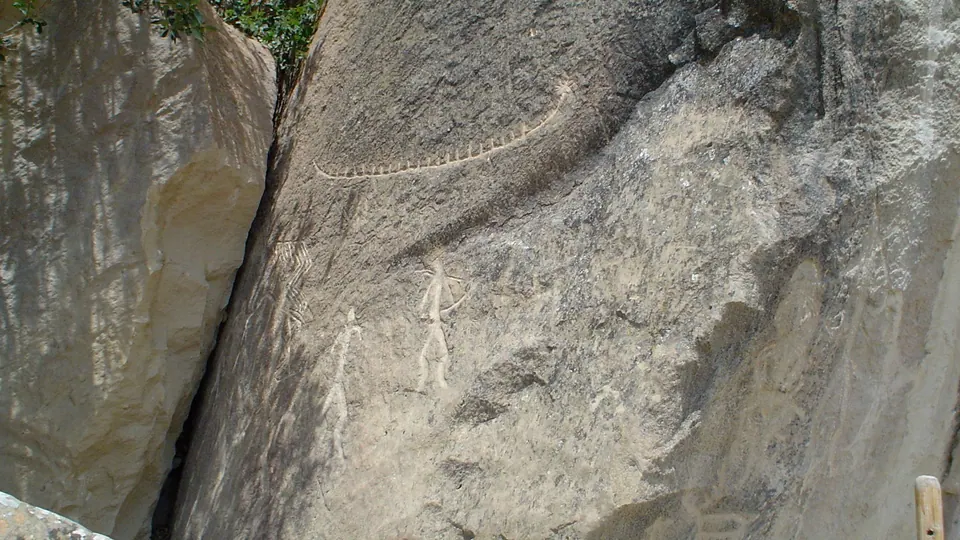
The rock engravings of Gobustan (Qobustan) and the nearby mud volcanoes lie south and south-west of Baku, and they can be combined in one day. The questions are practical: what you will actually see among the rocks, where you can visit the mud volcanoes, when the site closes and what can spoil the day. The short answer: the site has been on UNESCO’s World Heritage List since 2007 and holds more than 6,000 rock engravings1; and a tourism complex for viewing the mud volcanoes opened in 20243. The two stops take most of a day (our planning estimate, not an official figure). Confirm opening hours and ticket prices before you set off: we could not confirm them from an official source.
What UNESCO inscribed
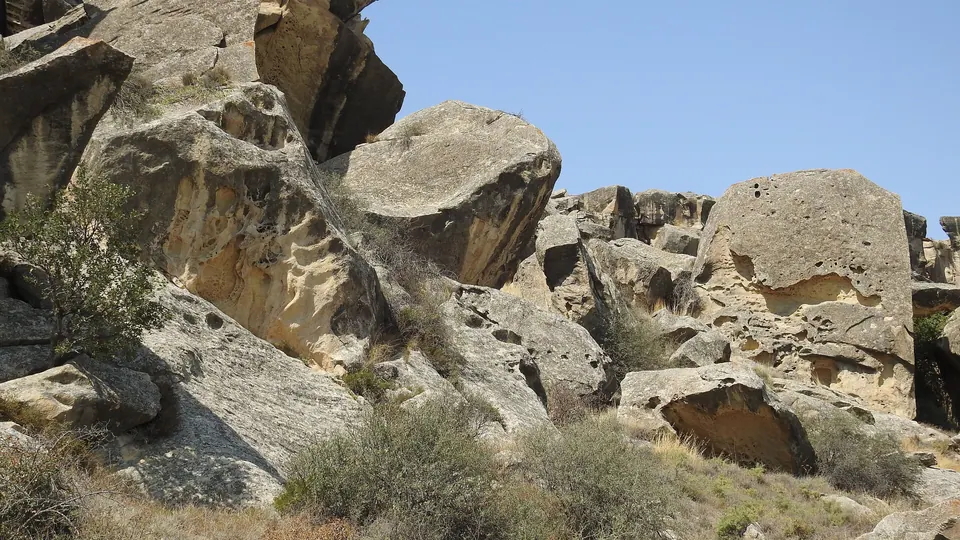
UNESCO describes three areas of a plateau of rocky boulders rising out of the semi-desert of central Azerbaijan, with more than 6,000 rock engravings bearing testimony to 40,000 years of rock art, alongside the remains of inhabited caves, settlements and burials from the Upper Palaeolithic to the Middle Ages1. It inscribed the site under criterion (iii): the engravings are an exceptional testimony to a vanished way of life, depicting hunting and fishing at a time when the climate and vegetation were warmer and wetter than today1.
The inscribed property covers 537.22 hectares, with a buffer zone of 3,096.34 hectares, within the larger protected Gobustan Reservation1. The State Service for the Protection, Development and Restoration of Cultural Heritage under the Ministry of Culture says that the Gobustan National Historical-Artistic Reserve (Qobustan Milli Tarix-Bədii Qoruğu) was established on 9 September 1966 and covers 4,535 hectares2.
Official sources disagree on the age of the engravings: UNESCO speaks of 40,000 years1, the National Commission of the Republic of Azerbaijan for UNESCO of the 10th millennium BC to the Middle Ages6, and the official tourism site of between 5,000 and 20,000 years4. Treat any confident figure you hear as one estimate among several.
What to see in the reserve and the museum
The engravings
The State Service for Cultural Heritage says that more than 7,000 images on more than 1,000 rocks on the Boyukdash (Böyükdaş), Kichikdash (Kiçikdaş), Jingirdag (Cingirdağ), Shongar (Şonqar) and Shikhgaya (Şıxqaya) mountains are on the state register as monuments of world importance2. The National Commission for UNESCO points to scenes of group hunting, fighting, fishing and dancing, in which men (hunters, fishermen and rowers) are shown most often, with riders appearing in later images. It dates a well-known image of a multi-seat boat to the 6th millennium BC; Thor Heyerdahl saw in it a reed vessel related to Sumerian ones6.
A Roman inscription and a stone you can strike
The official tourism site mentions a rock inscription left by a passing Roman soldier in the 1st century AD, which it calls the easternmost Roman inscription ever found, and a 2-metre musical stone, the gaval dash (qaval daş), that sounds like a tambourine when struck with a smaller stone4. According to the National Commission for UNESCO, such stones served as drums whose sound carried for several kilometres6.
The museum
The National Commission for UNESCO says that a modern museum opened in Gobustan in 2011. Its 2,460 square metres cover World Heritage sites, the discovery of the engravings, the ancient people of Gobustan and the area’s original flora and fauna, and its stores hold more than 100,000 archaeological finds, from tools and weapons to jewellery and plant seeds. In 2013 it was one of the winners of the European Museum of the Year Award (EMYA)6. We suggest starting in the museum: it makes the faint lines on the rocks easier to read.
The mud volcanoes: what official sources say
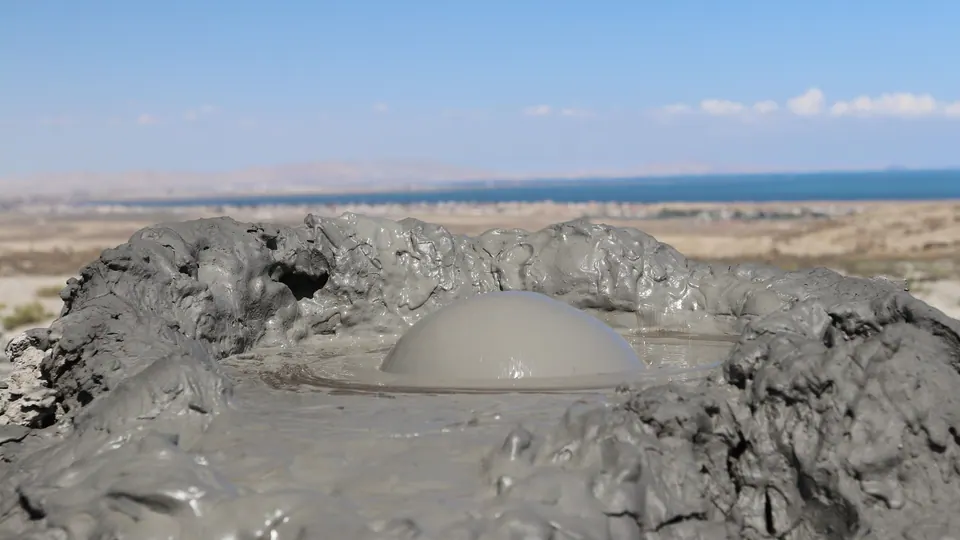
The Ministry of Ecology and Natural Resources says that Azerbaijan’s oil and gas regions hold more than 300 mud volcanoes and mud-volcanic manifestations, most with intense gryphon and salsa activity (small vents and mud pools) that brings hydrocarbon gases, mineralised water and oil-emulsified mud to the surface7.
A state nature reserve
Presidential Order No. 2315 of 15 August 2007 created the State Nature Reserve of the Group of Mud Volcanoes of Baku and the Absheron Peninsula, with stated aims that included reducing human impact on the volcanoes and preventing residential construction where eruptions are possible. A Cabinet of Ministers order of 29 September 2011 then declared 43 mud volcanoes, over 12,322.84 hectares, a reserve5. The volcanoes are active: the Ministry reports two to five eruptive episodes in Azerbaijan each year, sometimes more, and a record 16 eruptions in 2001, most of them in Gobustan7.
The Mud Volcanoes Tourism Complex
At the foundation ceremony in 2021, the President’s official website placed the complex 59 kilometres south-west of Baku, on the main road towards Shamakhi, in an area known for the Qılınc mud volcanoes8. It opened on 13 June 2024 on a 12-hectare site in the Absheron district, with a 110-seat restaurant and a footpath for watching the volcanoes, including Qılınc at close range3; Qılınc is on the list of volcanoes within the state nature reserve5. The official tourism site adds an information centre on the properties of the mud, natural history and mineral exhibitions, quad bike and golf cart tours, and a café-restaurant9.
The tourism complex is not the only mud-volcano area in the region5, but we found no official visitor information on the others or their access tracks. If a driver proposes a different field, ask in advance which one and how you will reach it.
Hours and tickets: check before you go
The reserve’s page at the State Service for Cultural Heritage (irs.gov.az, undated) gives its address as AZ1084, Baku, Garadagh district, Gobustan settlement2.
We print neither opening hours nor a ticket price. When we re-checked on 2 October 2026, that page could not be opened over a secure connection, and the reserve’s own website, linked from UNESCO’s page1, did not load. We also found no official hours or separate ticket price for the tourism complex. Before you set off, confirm the opening hours, the prices, and whether a ticket covers the museum and the rock area.
Planning the day
Anything in this section not attributed to a source is our practical suggestion, not official information.
- Distance: the reserve lies about 60 kilometres south of Baku4, and the tourism complex 59 kilometres south-west of Baku8. We found no official driving time, so agree the route and stops with your driver.
- Order: once you have confirmed the reserve’s hours, see the reserve and museum first and the volcanoes afterwards; we found no official hours for the complex.
- Season: the official tourism site gives spring, summer and autumn as the peak season for both places4,9.
- Heat: UNESCO describes the setting as semi-desert1, and shade is scarce. Take water, a hat and closed shoes for stony ground.
- Rain: we found no official statement on access after rain. Wet mud is slippery; if it has rained, check with your driver or the complex on the day.
Respectful conduct at the rock art and the volcanoes
UNESCO says the site still needs active conservation measures1, and the mud-volcano reserve exists partly to reduce human impact5. We found no official visitor code, so we suggest:
- Do not touch the engravings, trace them with your fingers, or wet or chalk them for photographs.
- Do not climb on engraved rocks; keep to the marked paths, and take nothing away.
- At the volcanoes, keep clear of fresh mud flows and crater edges and follow staff instructions: eruptive episodes occur in Azerbaijan every year7.
- Ask at the entrance about photography and drone rules.
When this trip may not suit you
- Limited mobility. UNESCO describes a plateau of rocky boulders1, and we found no official accessibility information for the rock-art area. The museum and the complex’s footpath3 may be easier to get around, but ask about access before you go.
- A rainy or very hot day. The paths will be harder going, and postponing may be wiser.
- You want a longer trip with a night away. Our guide to Sheki and the Khan’s Palace from Baku covers a different kind of trip.
Frequently asked questions
Can I see Gobustan and the mud volcanoes in one day?
Usually, yes. Both lie roughly 60 kilometres from Baku4,8. Allow most of a day (our planning estimate), and confirm the reserve’s opening hours before you go.
Are the mud volcanoes dangerous?
The Ministry of Ecology and Natural Resources reports two to five eruptive episodes in Azerbaijan each year, sometimes more7, and the reserve was created partly to keep housing out of zones where eruptions are possible5. Stay on the paths, keep clear of fresh mud and crater edges, and follow staff instructions.
How much is a ticket to Gobustan?
We found no price in an official source we could open, so ask the reserve before you go or at the entrance.
Sources
Source 1: UNESCOGobustan Rock Art Cultural Landscape↩
Source details
- Source date
- Undated (no date shown)
- Accessed
- 1 October 2026
Source 2: State Service for Cultural HeritageGobustan National Historical-Artistic Reserve↩
Source details
- Original title
- Qobustan Milli Tarix-Bədii Qoruğu
- Source date
- Undated (no date shown)
- Accessed
- 1 October 2026
Source 3: President of AzerbaijanOpening of the Mud Volcanoes Tourism Complex↩
Source details
- Original title
- İlham Əliyev Palçıq Vulkanları Turizm Kompleksinin açılışında iştirak edib
- Source date
- 13 June 2024
- Accessed
- 1 October 2026
Source 4: Azerbaijan Tourism BoardDiscover Gobustan’s ancient rock art↩
Source details
- Source date
- Undated (no date shown)
- Accessed
- 1 October 2026
Source 5: Ministry of EcologyMud Volcanoes Group State Nature Reserve↩
Source details
- Original title
- Palçıq vulkanları qrupu Dövlət Təbiət Qoruğu
- Source date
- Undated (no date shown)
- Accessed
- 1 October 2026
Source 6: National Commission for UNESCOGobustan Rock Art Cultural Landscape↩
Source details
- Source date
- Undated (no date shown; site footer reads "© ... 2026")
- Accessed
- 1 October 2026
Source 7: Ministry of EcologyMud volcanoes↩
Source details
- Original title
- Palçıq vulkanları
- Source date
- Undated (no date shown)
- Accessed
- 1 October 2026
Source 8: President of AzerbaijanFoundation of the Mud Volcanoes Tourism Complex↩
Source details
- Original title
- İlham Əliyev Palçıq Vulkanları Turizm Kompleksinin təməlqoyma mərasimində iştirak edib
- Source date
- 22 April 2021
- Accessed
- 1 October 2026
Source 9: Azerbaijan Tourism BoardExplore Baku’s mud volcanoes↩
Source details
- Source date
- Undated (no date shown)
- Accessed
- 1 October 2026
Related articles
More in Visiting Azerbaijan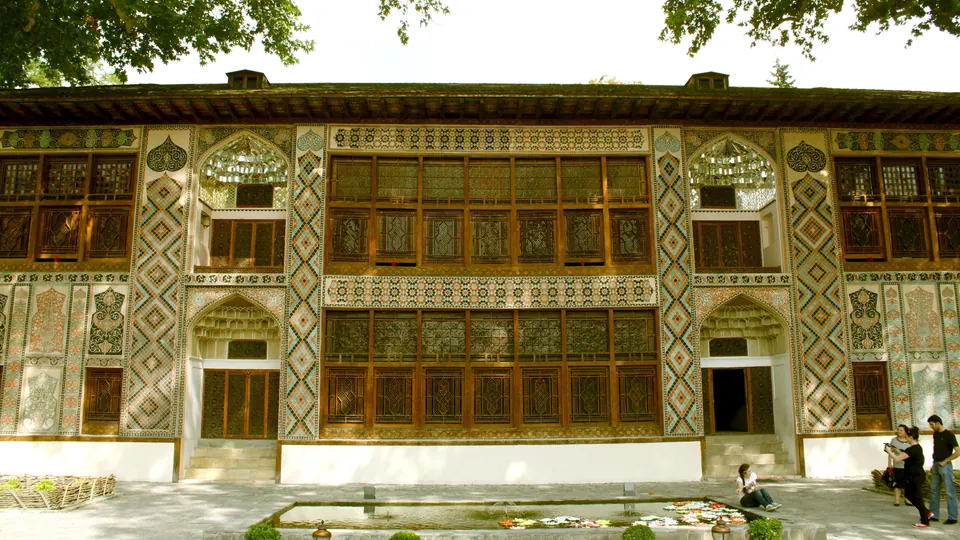
Sheki: Khan’s Palace and trip planning
What to see in Sheki, whether to go for a day or stay the night, how to get there from Baku, and what to confirm before you travel.
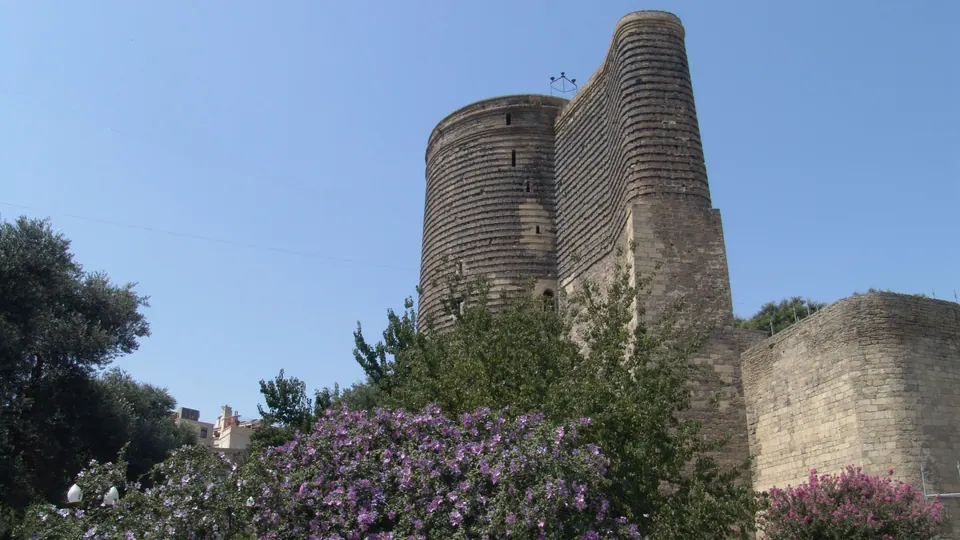
Baku’s Old City: a visitor’s plan
What to see in Baku’s walled Old City, in what order, which museums need a ticket, and how to plan a well-paced visit.
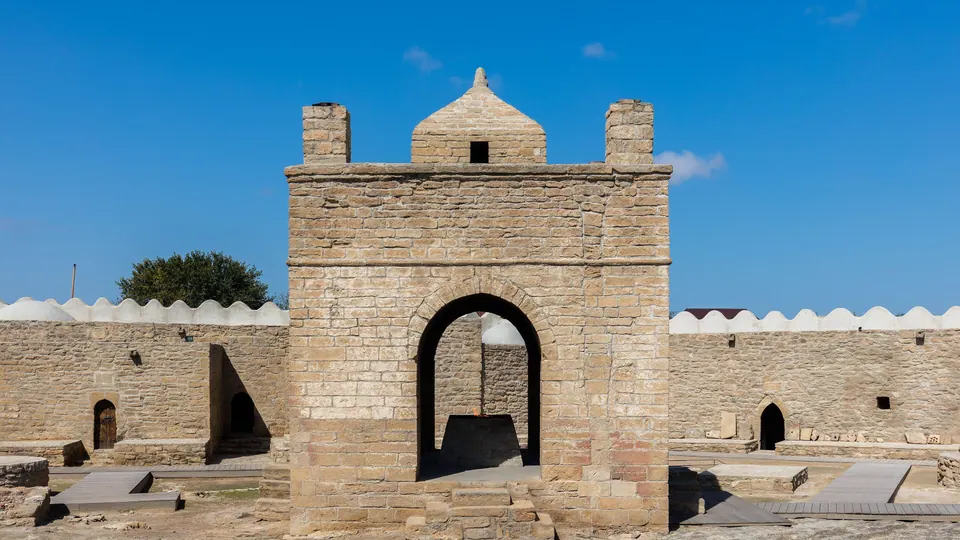
Ateshgah and Yanar Dag, Baku’s fire sites
What the Ateshgah temple and the Yanar Dag hillside are, why they burn, and how to combine them in half a day with one ticket and due respect for their heritage.