Study and educationChecklist
Studying medicine in Azerbaijan: what to check before enrolling
Five checks before paying tuition: the licensing authority, World Directory notes, accreditation and its expiry, programme details and clinical training.
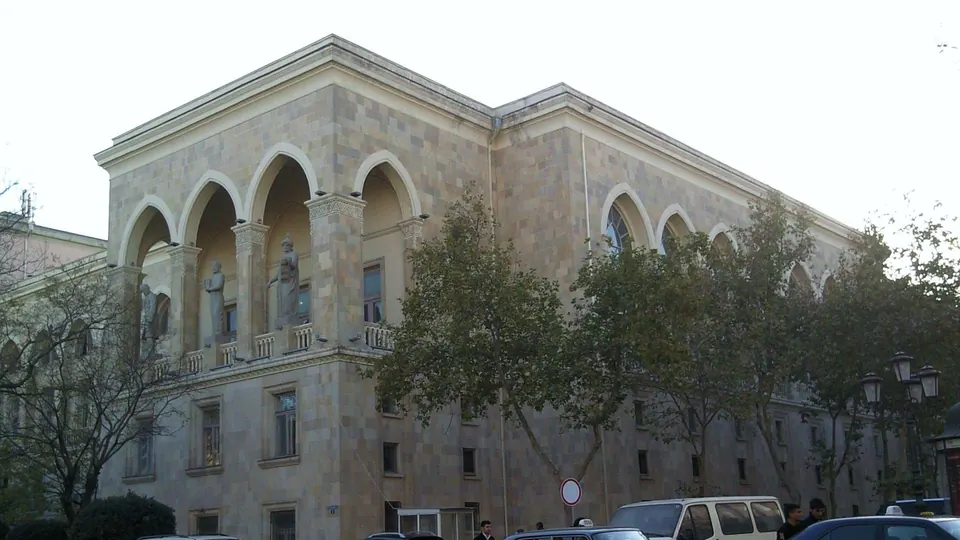
Families considering medical school in Azerbaijan often compare universities on price and reputation. The more important question is whether the degree can lead to a licence in the country where the graduate wants to practise, and only the licensing authority in that country can answer it. The short answer: start with the licensing authority in your target country, then check four things: the school’s World Directory listing and its Sponsor Notes, the accrediting agency and whether your programme’s accreditation is still current, the programme details, and clinical training. We use Azerbaijan Medical University (AMU) in Baku as a worked example. This article does not say whether any country accepts a particular degree.
Start with where you want to practise
Every country has a body that licenses doctors, and each sets its own conditions. Two examples show the kind of evidence these bodies ask for. In Saudi Arabia, the Saudi Commission for Health Specialties (SCFHS) handles professional classification. According to its professional classification requirements page (last updated 30 September 2026), for qualifications obtained outside Saudi Arabia it asks for a verification result from a verification company it approves, with stated exceptions, and for an academic record showing the programme details, its duration and the practical or internship training6. SCFHS’s undated examination content guideline for its licensing exam, the SMLE, describes the exam as assessing readiness to practise, to proceed to postgraduate training, or both7. In the UK, the GMC advises doctors not to accept confirmation from any third party, including their own medical school, that a qualification is acceptable, and asks them to contact the GMC directly5.
These examples describe procedures only. They do not mean that SCFHS, the GMC or any other authority accepts a degree from any Azerbaijani university; we cannot confirm that, and neither can any university or agent. Before you enrol, write to the authority in the country where you intend to work and ask about the university, programme and language track by name. Get the answer before you pay tuition fees.
Five checks before you enrol
Diagram
Medicine in Azerbaijan: five checks before enrolling
- Licensing authority where you will practise: ask in writing about the university, programme and language track by name
- WDOMS: a listing is not recognition; read the Sponsor Notes and check that your graduation year is covered
- Accreditation: is the agency WFME-recognised? Does it cover your programme and track? Valid until when?
- Programme: length, language track, foundation course
- Clinical training: where, and in which language? Get it in writing
1. The Directory listing and its Sponsor Notes
Search for the school in the World Directory of Medical Schools (search.wdoms.org). The Directory states that a listing does not denote recognition, accreditation or endorsement1, so open the Sponsor Notes tab. According to ECFMG, if a school’s listing has no ECFMG Sponsor Note, its students and graduates are not eligible for ECFMG Certification2. The 2026 edition of ECFMG’s Information Booklet adds that your graduation year must be included in that note8.
Worked example: AMU’s listing carries an ECFMG Sponsor Note stating that its students and graduates are eligible to apply for ECFMG Certification, for graduation years from 1953 to the present9. That is eligibility to apply for certification. It is not a licence, and it is not recognition of the degree by any country. A second note says that, according to data provided to Intealth, one or more of the school’s medical education programmes currently meets the Intealth Recognized Accreditation Policy; it does not name the programme9. Ask the university in writing which programme and language track the note covers.

2. Accreditation: which agency, and is it current?
Intealth, of which ECFMG is a division, runs a Recognized Accreditation Policy, under which a school’s accrediting agency must be recognised by WFME or by NCFMEA (the US National Committee on Foreign Medical Education and Accreditation), and the school must have an ECFMG Sponsor Note. Implementation of the policy began in November 202410. ECFMG states that the reporting of a school’s status under the Recognized Accreditation Policy, as in the second note on AMU’s listing, is for information only and does not affect an individual’s eligibility for ECFMG Certification2.
Two different dates matter here, and they are easy to confuse.
Diagram
Two different dates: agency recognition and programme accreditation
- Agency recognition: WFME’s list shows IAAR (Kazakhstan) for Azerbaijan, recognised until January 2028
- Programme accreditation: IAAR’s register shows AMU General Medicine accredited 28 January 2022 to 27 January 2027
- AMU Dentistry and Pharmacy: same dates on the register
- Ask the university: is re‑accreditation under way, and which language tracks does the accreditation certificate cover?
- The agency’s recognition. WFME’s list (last modified 3 September 2026) shows IAAR for Azerbaijan, recognised until January 20283. When we checked it on 30 September 2026, the list did not include Azerbaijan’s national agency, the Education Quality Assurance Agency3. FAIMER’s directory of accrediting agencies (last revised 21 September 2022) lists both IAAR and the national agency, and notes that WFME recognition of an agency does not mean that every medical school in the country is currently accredited by it11.
- The programme’s accreditation. IAAR’s public register, as we checked it on 30 September 2026, lists AMU’s General Medicine programme as accredited from 28 January 2022 to 27 January 2027, with the same dates for Dentistry and Pharmacy4,12,13. The register does not say which language tracks are covered.
So ask the university in writing whether the programme has been re-accredited or re-accreditation is under way, request the current accreditation certificate, and ask which language tracks it covers. Check the register again before you pay.
3. The licensing route in your country
Ask the licensing authority in your country three questions. Does it accept this qualification from this university and in this language track? Is a licensing exam required? Which documents prove the length of the programme and the clinical training? SCFHS, for example, asks for such an academic record, as noted above6.
4. Programme details: length, language, foundation course
For AMU, the Directory lists a 6-year medicine programme with the degree title “Physician”, taught in Russian, English and Azerbaijani; it gives 2010 as the year the curriculum was last revised9. The university’s document for foreign students describes teaching in three languages and a 6-month Foundation Course (language of instruction, physics, chemistry and biology) for students admitted to it14. Its undated FAQ page, read on 3 October 2026, gives the preparatory course as 5 months15, so ask the university which length applies to your intake. Make sure the track you enrol in is the one named in the accreditation documents. For how to submit an application, see our guide How to apply to a university in Azerbaijan.
5. Clinical training and the language of patient contact
We found no official source stating which language students use with patients during clinical training. Ask the university in writing where clinical training takes place, in which language, and whether you will be expected to learn Azerbaijani or Russian to communicate with patients. This matters because licensing authorities ask for details of practical training6.
When this may not suit you
- Your licensing authority will not confirm in writing that it accepts the qualification.
- The university cannot show current accreditation for your programme and language track, or cannot explain what applies after 27 January 20274.
- You are not prepared for clinical training that may require a language other than your own.
- Someone promises recognition, a licence or equivalence. No university, agent or coordinator can promise that.
Waiting a year for clear written answers is usually better than enrolling without them.
Frequently asked questions
Is a World Directory listing enough?
No. The Directory itself states that a listing does not denote recognition, accreditation or endorsement1. It is a starting point. What matters after that are the Sponsor Notes on the school’s page, the current accreditation of your programme, and the rules of the licensing authority in the country where you intend to practise.
Is having my degree recognised the same as being licensed?
Do not assume so. The authority in the country where you plan to practise sets its own registration and licensing conditions. SCFHS, for example, asks for a verification result from a verification company it approves, with stated exceptions, and has its own licensing exam7,6. Ask that authority directly, in writing, before enrolling.
Sources
Source 1: World Directory of Medical Schools (WFME and FAIMER)World Directory of Medical Schools Search↩
Source details
- Source date
- Undated (no date shown)
- Accessed
- 30 September 2026
Source 2: ECFMG (a member of Intealth)Resources: Sponsor Notes in the World Directory↩
Source details
- Source date
- 9 January 2026
- Accessed
- 30 September 2026
Source 3: World Federation for Medical Education (WFME)Agencies with Recognition Status↩
Source details
- Original title
- Agencies with Recognition Status - World Federation for Medical Education
- Source date
- 3 September 2026
- Accessed
- 30 September 2026
Source 4: Independent Agency for Accreditation and Rating (IAAR)IAAR Registry: Azerbaijan Medical University, 070101 General Medicine↩
Source details
- Original title
- НААР / IAAR — Registry: Azerbaijan Medical University, 070101 General Medicine
- Source date
- Undated page; accreditation shown as 28 January 2022 to 27 January 2027
- Accessed
- 30 September 2026
Source 5: General Medical Council (UK)Is my overseas medical qualification acceptable?↩
Source details
- Source date
- Undated (no date shown)
- Accessed
- 30 September 2026
Source 6: Saudi Commission for Health Specialties (SCFHS)Professional classification requirements↩
Source details
- Source date
- Last updated 30 September 2026
- Accessed
- 30 September 2026
Source 7: Saudi Commission for Health Specialties (SCFHS)Saudi Medical Licensure Examination (SMLE) - Examination Content Guideline↩
Source details
- Original title
- Saudi Medical Licensure Examination (SMLE) - EXAMINATION CONTENT GUIDELINE
- Source date
- Undated (no date shown)
- Accessed
- 30 September 2026
Source 8: ECFMG (a member of Intealth)ECFMG 2026 Information Booklet - Medical Education Credential Requirements↩
Source details
- Source date
- 9 January 2026
- Accessed
- 30 September 2026
Source 9: World Directory of Medical Schools (WFME and FAIMER)School Detail: Azerbaijan Medical University↩
Source details
- Source date
- Undated (no date shown)
- Accessed
- 30 September 2026
Source 10: IntealthIntealth: Recognized Accreditation Policy↩
Source details
- Source date
- 31 March 2025
- Accessed
- 30 September 2026
Source 11: FAIMER (a member of Intealth)FAIMER Directory of Organizations that Recognize/Accredit Medical Schools (DORA): Azerbaijan↩
Source details
- Original title
- FAIMER | DORA | Azerbaijan
- Source date
- 21 September 2022
- Accessed
- 30 September 2026
Source 12: Independent Agency for Accreditation and Rating (IAAR)IAAR Registry: Azerbaijan Medical University, 070104 Dentistry↩
Source details
- Original title
- НААР / IAAR — Registry: Azerbaijan Medical University, 070104 Dentistry
- Source date
- Undated page; accreditation shown as 28 January 2022 to 27 January 2027
- Accessed
- 30 September 2026
Source 13: Independent Agency for Accreditation and Rating (IAAR)IAAR Registry: Azerbaijan Medical University, 050806 Pharmacy↩
Source details
- Original title
- НААР / IAAR — Registry: Azerbaijan Medical University, 050806 Pharmacy
- Source date
- Undated page; accreditation shown as 28 January 2022 to 27 January 2027
- Accessed
- 30 September 2026
Source 14: Azerbaijan Medical UniversityDean’s Office for Foreign Students↩
Source details
- Original title
- Dean’s Office (Əcnəbi təhsilalanlar dekanlığı)
- Source date
- Undated (no date shown)
- Accessed
- 30 September 2026
Source 15: Azerbaijan Medical UniversityFrequently asked questions↩
Source details
- Original title
- Tez-tez verilən suallar
- Source date
- Undated (no date shown)
- Accessed
- 3 October 2026
Related articles
More in Study and education
Applying to universities in Azerbaijan
The official SIACAS channel, the documents the rules list, the usual order of steps, and the dates we could verify.
Place-of-stay registration: who, when and how
Who registers a foreigner’s place of stay in Azerbaijan, the 15-day deadline (30 days for citizens of Kazakhstan), filing online, by email or at an ASAN centre, and what changes if you move.
Language of study and the preparatory year
Which languages programmes are taught in, who checks your language level, when a preparatory course applies, and what to ask the university before you apply.