
Living in AzerbaijanChecklist
Bank account, SIM card and daily services in Azerbaijan
Which document opens which service for a new resident: the SIM contract, the 30-day phone registration and its state duty, what a bank asks before opening an account, and where utilities and transport are handled.

You have just arrived in Azerbaijan to live, and three things come first: a local number, a phone that keeps working, and a bank account. The short answer: each starts with your identity document. A SIM contract needs a copy of the subscriber’s photo identity document1. A phone you bring in for personal use must be registered within 30 days at the latest2, for a state duty of 15 to 100 manat3. A bank must identify you before it opens an account, and may not open one if that check cannot be completed4,5; beyond that, the bank decides. This guide shows what to prepare for each service and where the official rules stop.
Contact us on WhatsApp
Message us on WhatsAppWhich document unlocks what
Three documents matter in your first months.
- Passport. The rules ask for an “identity document”: with a photograph for the SIM contract1, in the original for registering a phone2, and for a non-resident’s bank account4. None lists the documents accepted from a foreigner. For a new arrival that is in practice the passport; this is our reading, so confirm with the operator or the bank.
- Place-of-stay registration. A bank records a new customer’s registered and actual address4. In our reading, place-of-stay registration provides the first; the Rule does not say so. Who registers you, and by when, is in our guide Place-of-stay registration in Azerbaijan: who, when and how.
- Temporary residence permit card. Under the Migration Code (Miqrasiya Məcəlləsi), the card confirms the holder’s identity and registration at the place of residence6. Once you hold it, ask your bank whether it treats you as a resident: the Central Bank’s Rule takes that term from the Law on Currency Regulation4, which we did not review.
| Service | What you need | Where | Source |
|---|---|---|---|
| SIM card | Photo identity document; a copy is attached to the contract | The mobile operator | Law on Telecommunications, Article 40.3-11 |
| Phone registration (IMEI) | Original identity document; make, model and IMEI; application form; state duty | Online (my.gov.az, according to the imei.az notice), or in writing: see below | Registration Rule2; Law on State Duty3; imei.az notice7 |
| Bank account | Identity document, signature specimen, the bank’s questions | The bank you choose | Central Bank Rule4; the bank’s own page8 |
| Gas, electricity, water, heating | Not listed on the page we read: ask the provider | ASAN Kommunal centres | ASAN service9 |
| Metro and bus fares | A BakıKart; no document is mentioned | BakıKart terminals | BakıKart10 |
Mobile: the SIM card and the phone itself
The SIM card. The Law on Telecommunications says the service contract is concluded in the state language, with a copy of the subscriber’s photo identity document attached1. Operators may set conditions of their own, which we did not review.
The phone. The same Law requires mobile devices to be registered and forbids operators to serve a device whose IMEI is on the system’s black list1. The details are in the Rule approved by Cabinet of Ministers Decision No. 212 of 28 December 2011, last amended on 22 May 20242:
- Who and when: every device brought into the country for personal use must be registered within 30 days at the latest.
- How: electronically, through the e-government portal after authorisation; or in writing at the registration centre, a mobile operator’s customer service or a post office, where you show your original identity document, state the make, model and IMEI, and complete the application form.
- How long: the data are examined within 2 working days; if nothing is missing or inconsistent, the IMEI is entered in the white list and you are told by SMS.
- If you do not: operators restrict unregistered devices. Once an IMEI enters the black list, the restriction follows within 24 hours and blocks every telecommunications service through that device.
Clause 6.1 of the Rule does not say which event starts the 30 days, so do not plan around the last day. A notice on imei.az, undated and read on 2 October 2026, says its registration services have moved to the my.gov.az portal7. We did not test whether a foreigner can sign in there, so the written route may be the practical one; that is our suggestion.
What this table covers: the state duty for registering one mobile device that an individual brings into Azerbaijan for personal use, under Article 33-5 of the Law on State Duty as we read it on 2 October 2026. It does not cover devices imported for sale with customs duty, excise and VAT paid, any operator charge, or the price of a SIM card or tariff.
| Device | State duty |
|---|---|
| Market price up to 100 US dollars, with no photo, video or internet functions | 15 manat |
| Other devices, market price up to 100 US dollars | 20 manat |
| 101 to 200 US dollars | 30 manat |
| 201 to 400 US dollars | 40 manat |
| 401 to 700 US dollars | 50 manat |
| 701 to 1,000 US dollars | 70 manat |
| Above 1,001 US dollars | 100 manat |
| Make, model and market price not published on the official site on the application date | 15 manat |
| Each device beyond the first in a calendar year | 100 manat |
The market price is the value of a new device of the same make and model, whatever the condition of yours3.
Bank account: what the rules require and what the bank decides
Contact us on WhatsApp
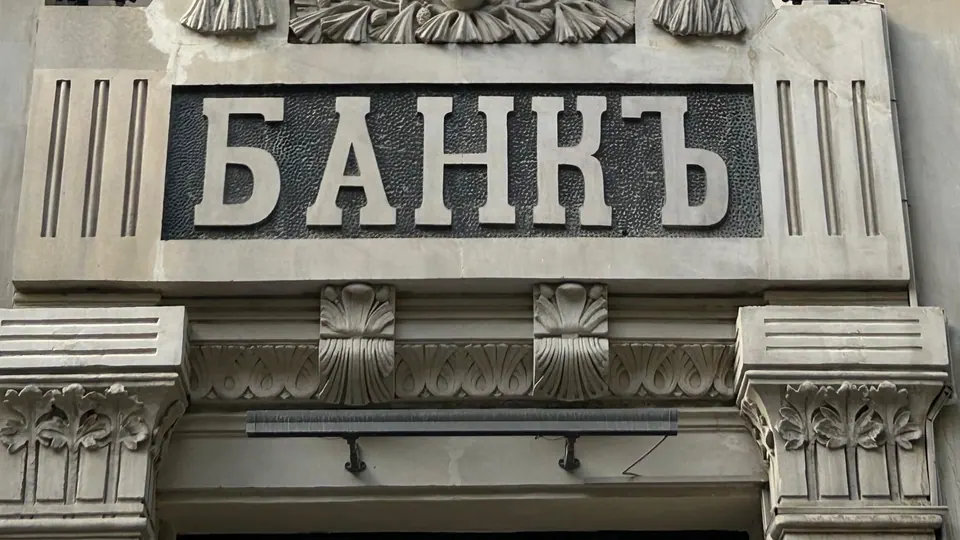
Message us on WhatsAppUnder the Law on combating money laundering, adopted on 30 December 2022, a financial institution must identify the customer, verify the data against reliable, independent sources and clarify the purpose of the relationship before it begins; if it cannot, the account must not be opened5. The Central Bank’s Rule on opening, maintaining and closing bank accounts (Decision No. 04/2 of 4 February 2022, last amended on 16 December 2025) sets out the detail4:
- Initial information: name, date and place of birth, citizenship, identity document details, registered and actual address, resident or non-resident status, phone number and email, workplace if any, and the expected purpose of the account.
- Documents for a non-resident individual: the identity document and a signature specimen. The bank may ask for other documents under the customer due diligence rules.
- Refusal: the bank refuses when due diligence cannot be applied, including when documents are incomplete or the information is contradictory. On request it gives the reason in writing, except where the law provides otherwise.
Requirements can differ by bank, and the bank decides: each applies its own internal rules, which under the Rule must not unreasonably restrict customers’ access to financial services4. One example only: Xalq Bank’s current account page (undated, read on 2 October 2026) asks for an identity document and for the bank’s forms, including a tax-residency self-assessment and a due diligence questionnaire. The bank states that opening the account is free, with no initial deposit and no minimum balance8. That is a commercial bank’s own statement, not a state fee, and it does not cover the bank’s other tariffs.
Everyday services
- Utilities. ASAN Kommunal centres host the gas, electricity, water and heating providers’ services, according to the ASAN service site (ASAN xidmət)9. The page does not say which documents a foreign tenant or owner needs, so ask the provider.
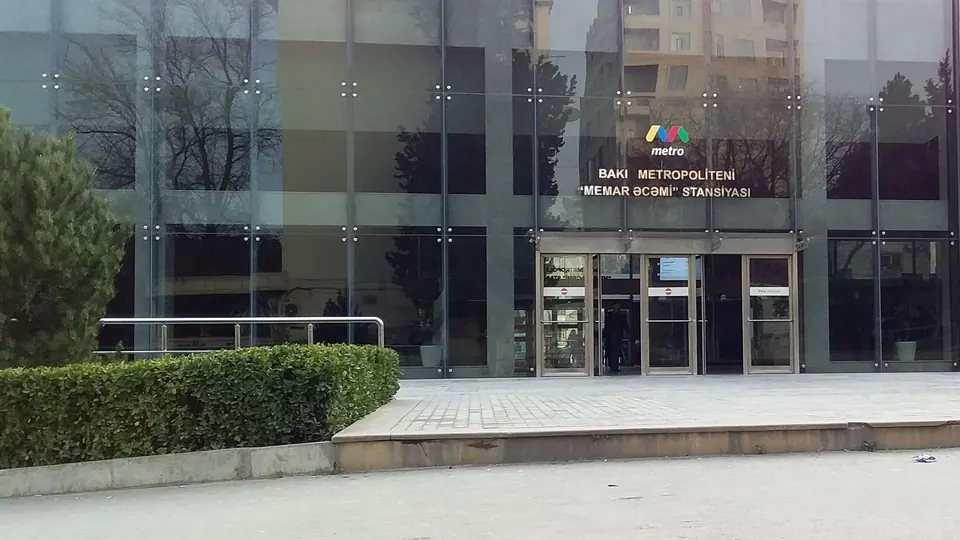
- Public transport. Baku metro and bus fares are paid with a BakıKart card from terminals in metro stations and at bus stops; the BakıKart site (undated, read on 2 October 2026) gives the card’s sale price as 3 manat10.
Mistakes to avoid
- Letting the 30 days lapse. Operators restrict unregistered devices, and a black-listed IMEI loses all service within 24 hours2. Our suggestion: register in your first week.
- Taking a SIM in someone else’s name. The contract carries the subscriber’s identity document1, and the bank records your phone number4. Our suggestion: use a number held under your own contract.
- Bringing a second phone in the same year without budgeting for it. Each device beyond the first in a calendar year costs 100 manat to register3.
- Going to the bank before you have an address. The bank records your registered and actual address, and refuses when due diligence cannot be completed4. Our suggestion: complete your place-of-stay registration first.
When this may not suit you
- You are visiting briefly. If you stay on your home SIM in roaming, the registration Rule does not apply to you2.
- You need a company account. The Rule lists different documents for legal entities and entrepreneurs4; this guide covers personal accounts only.
Where ALVERA GLOBAL fits
For newcomers, ALVERA GLOBAL’s team in Baku works on arrival and housing arrangements, and help settling in, for you and your family. ALVERA GLOBAL is not a government body, a bank, a telecom operator, a notary, a law firm or a tax adviser; it cannot open an account for you or promise the decision of a bank, an operator or an authority. Licensed professionals handle notarisation, sworn translation, and legal and tax work. Any ALVERA GLOBAL fee is agreed in writing before work starts, separately from official fees and third-party costs.
Frequently asked questions
Can I get a SIM card with only my passport?
The Law on Telecommunications requires a copy of the subscriber’s photo identity document to be attached to the contract1. It does not list the accepted documents, so confirm with the operator that your passport is enough.
Do I have to register my phone if I keep my home SIM?
The registration Rule does not apply to subscribers using international roaming with a foreign operator’s SIM2. Otherwise, every device brought in for personal use must be registered within 30 days at the latest2.
Can a foreigner without a residence permit open a bank account?
The Central Bank’s Rule provides for accounts for non-residents and lists an identity document and a signature specimen for an individual4. Each bank applies its due diligence and decides, so ask the bank first.
Sources
Source 1: Ministry of Justice (e-qanun.az)Law on Telecommunications↩
Source details
- Original title
- Telekommunikasiya haqqında Azərbaycan Respublikasının Qanunu
- Source date
- Adopted 14 June 2005 (Law No. 927-IIQ); consolidated text marked in force; latest amendment listed: Law No. 161-VIIQD of 18 March 2025
- Accessed
- 2 October 2026
Source 2: Ministry of Justice (e-qanun.az)Rule on registration of mobile devices↩
Source details
- Original title
- “Mobil cihazların qeydiyyatının aparılması Qaydası”nın təsdiq edilməsi haqqında Azərbaycan Respublikası Nazirlər Kabinetinin Qərarı
- Source date
- Cabinet of Ministers Decision No. 212 of 28 December 2011; consolidated text marked in force; latest amendment listed: Decision No. 275 of 22 May 2024
- Accessed
- 2 October 2026
Source 3: Ministry of Justice (e-qanun.az)Law on State Duty↩
Source details
- Original title
- Dövlət rüsumu haqqında Azərbaycan Respublikasının Qanunu
- Source date
- Adopted 4 December 2001 (Law No. 223-IIQ); consolidated text marked in force; Article 33-5 amounts set by Law No. 1016-VIQD of 24 October 2023, Article 33-5.1.4 added by Law No. 297-VIIQD of 9 December 2025; amendment list runs to laws of 14 July 2026
- Accessed
- 2 October 2026
Source 4: Central Bank of Azerbaijan (e-qanun.az)Rule on opening, maintaining and closing bank accounts↩
Source details
- Original title
- “Bank hesablarının açılması, aparılması və bağlanması Qaydası”nın təsdiq edilməsi barədə Azərbaycan Respublikası Mərkəzi Bankının İdarə Heyətinin Qərarı
- Source date
- Central Bank Decision No. 04/2 of 4 February 2022; consolidated text marked in force; latest amendment listed: Decision No. 44/5 of 16 December 2025
- Accessed
- 2 October 2026
Source 5: Ministry of Justice (e-qanun.az)Law on combating money laundering and terrorist financing↩
Source details
- Original title
- Cinayət yolu ilə əldə edilmiş əmlakın leqallaşdırılmasına və terrorçuluğun maliyyələşdirilməsinə qarşı mübarizə haqqında Azərbaycan Respublikasının Qanunu
- Source date
- Adopted 30 December 2022 (Law No. 781-VIQ); consolidated text marked in force; amendment list includes Law No. 451-VIIQD of 14 July 2026
- Accessed
- 2 October 2026
Source 6: Ministry of Justice (e-qanun.az)Migration Code↩
Source details
- Original title
- Azərbaycan Respublikasının Miqrasiya Məcəlləsi
- Source date
- Adopted 2 July 2013 (Law No. 713-IVQ); consolidated text marked in force; latest amendment listed: Law No. 465-VIIQD of 14 July 2026
- Accessed
- 2 October 2026
Source 7: imei.azNotice: services moved to my.gov.az↩
Source details
- Original title
- DİQQƏT! imei.az saytında təqdim edilən mobil cihazların qeydiyyatı üzrə bütün xidmətlər my.gov.az şəxsi məlumatlar portalına inteqrasiya edilib
- Source date
- Undated (no date shown)
- Accessed
- 2 October 2026
Source 8: Xalq BankCurrent account↩
Source details
- Original title
- Cari hesab
- Source date
- Undated (no date shown)
- Accessed
- 2 October 2026
Source 9: ASAN serviceASAN Kommunal↩
Source details
- Original title
- ASAN kommunal
- Source date
- Undated (no date shown)
- Accessed
- 2 October 2026
Source 10: BakıKartTickets and tariffs↩
Source details
- Original title
- Bilet və tariflər
- Source date
- Undated (no date shown; page footer "© 2024")
- Accessed
- 2 October 2026
Related articles
More in Living in Azerbaijan
Place-of-stay registration: who, when and how
Who registers a foreigner’s place of stay in Azerbaijan, the 15-day deadline (30 days for citizens of Kazakhstan), filing online, by email or at an ASAN centre, and what changes if you move.
Azerbaijan e-visa: who needs one
Who can visit Azerbaijan visa-free, who needs an e-visa, how to apply on the official portal, and the limits to plan your trip around.
Renting a home in Baku as a newcomer
Before you pay, check the landlord’s title or power of attorney, get a written lease, know the legal cap on deposits and agree who files your place-of-stay registration.